.png)
Your website is not your front door anymore. An AI agent is. And right now, somewhere in your stack, your assumption that buyers still arrive through your homepage is quietly costing you customers.
That is not a forecast. That is just what happens when distribution shifts faster than the people building for it.
The Architecture Just Inverted
For thirty years, every internet business was built the same way. A website at the front. An API somewhere behind it. The website was for your customer. The API was for developers.
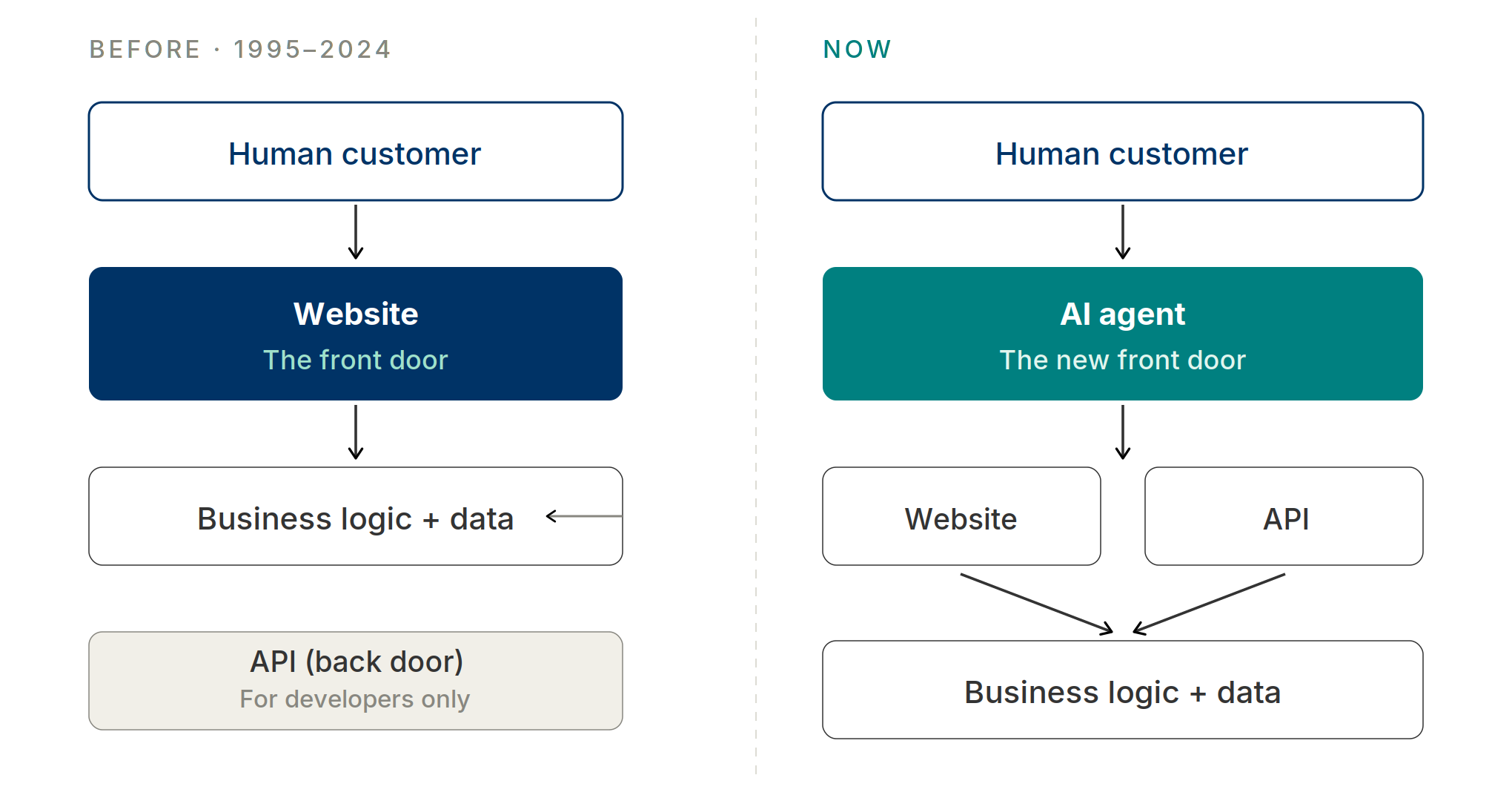
That order has flipped. AI agents now sit where the customer used to sit. They read your interface, call your endpoints, decide whether to buy, and report back to the human.
The buyer never sees your hero image. They see a recommendation from their agent. Your only shot at being chosen happens in a conversation you cannot see, conducted by software you did not build, on behalf of someone you never met.
That is not a developer-tools question. That is a distribution question.
Agents Do Not Buy the Way Humans Do
When humans were the buyers, you optimized for human taste. Pretty photos. Trust signals. Social proof. A clean checkout.
The whole conversion-optimization industry exists because humans are emotional, distractible, and influenced by design.
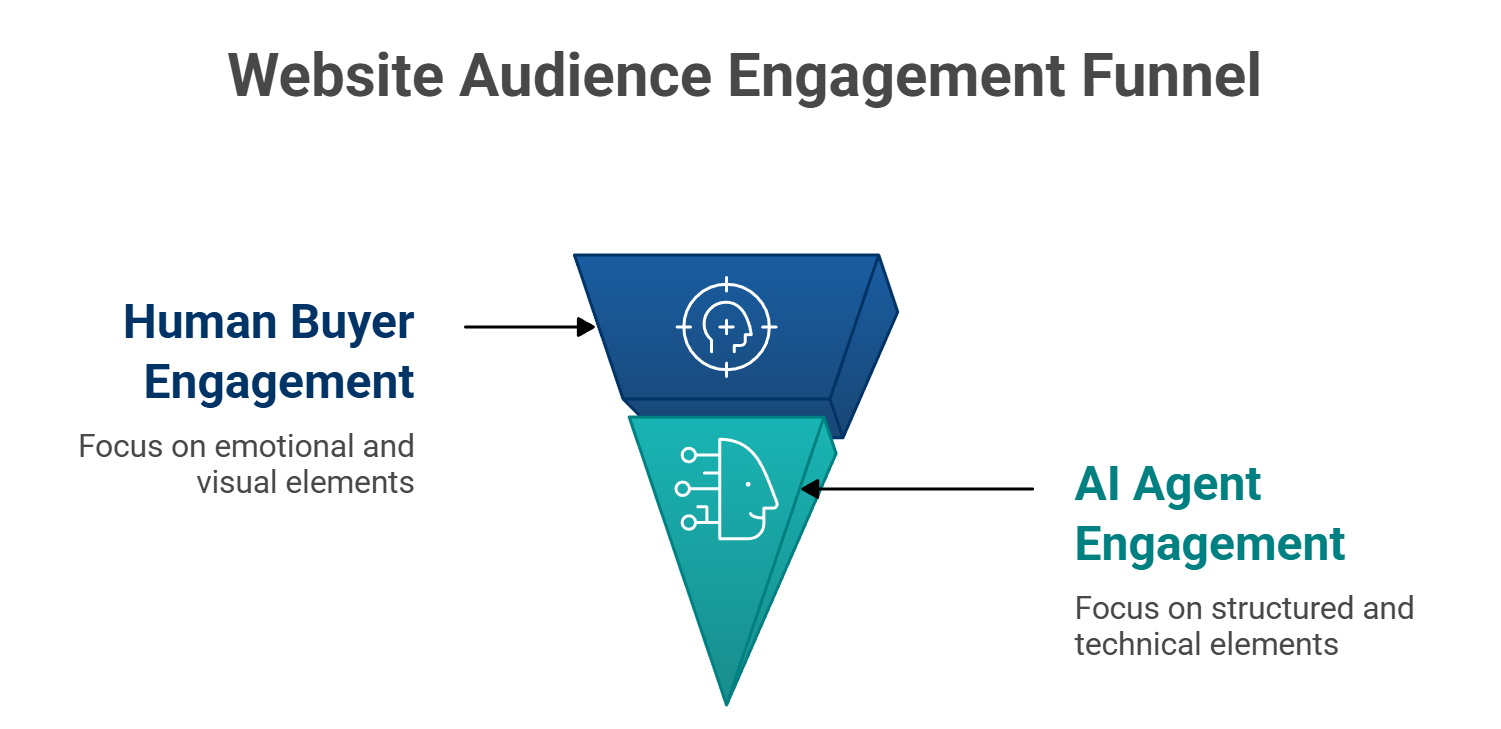
AI agents are not influenced by any of that. They care whether they can read your data, complete the transaction, and trust the result.
If your pricing sits behind a "Talk to Sales" button, you have been deprioritized. If your inventory feed updates every six hours, agents whose users check more often will pick a competitor. If your checkout demands a captcha, you do not exist.
The optimization layer of the web is being rewritten. It looks like SEO from a distance. Up close, it is a different job.
The Cost of Being Unreadable Is Invisible
Most of what it takes to be readable by AI agents is small. A clean product feed. Structured pricing. An llms.txt file pointing to your docs. The right user-agent allowances in robots.txt.
A competent engineering team could ship most of it in a week.
The cost of not doing it is structural and quiet. Agents that cannot read you do not recommend you. Agents that cannot transact with you route the buyer somewhere else. You do not see the lost sale in your analytics. You slowly stop appearing in conversations you used to be part of.
There is no error log for "buyer asked an agent about your product and the agent skipped you." That is the damage.
What to Do Before the Window Closes
You do not need a strategy memo. You need an afternoon.
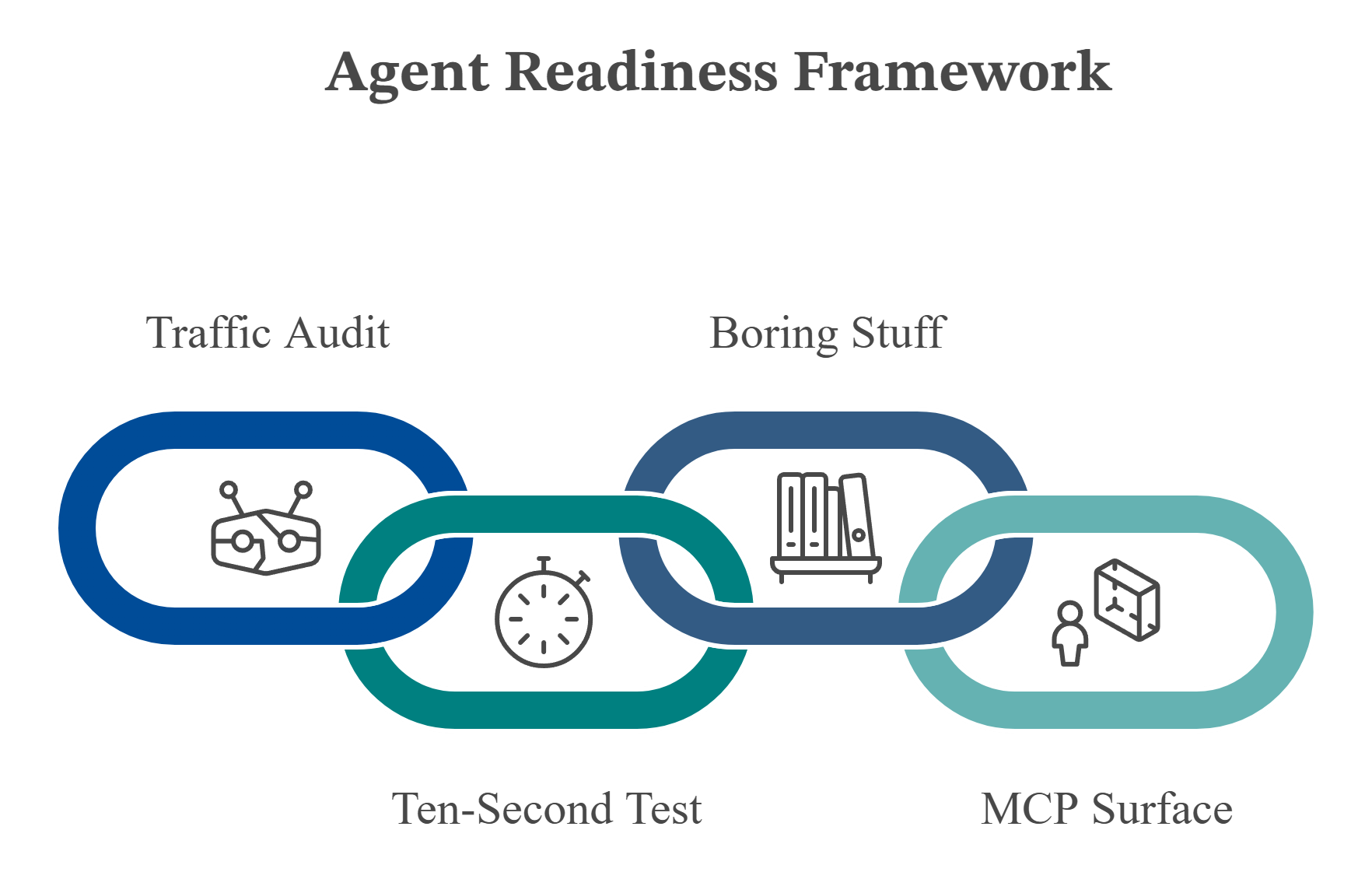
Pull your server logs. Look for ChatGPT-User, Claude-User, PerplexityBot. They are already there. Then open your pricing, signup, and support pages in a private window. Ask whether an agent with no human intuition could figure out what your product costs, who it is for, and how to buy it in the next ten seconds.
Then publish the boring stuff. Product feed. llms.txt. Robots.txt rules. If you sell on Shopify, expose your MCP surface.
The protocols are open today. Walled gardens, paid placement, and preferred-partner programs are coming. Right now, a three-person company can be discovered on the same terms as a Fortune 500. That parity is real, and it is temporary.
That is exactly why Linkenite exists. We do not start by configuring tools. We start by understanding how your buyers actually find and choose you, including the agents that are already representing them. Then we build the readable, callable, transactable surface your business needs to show up in the new conversation.
The protocols are open today. The advantage is temporary. We help you take it before the window closes.
Ready to make your business agent-ready? Visit www.linkenite.com


.png)
.png)
.png)
.png)
.png)
.png)
.png)
.png)
.png)
.png)
.png)
.png)

.png)
.png)
.png)
.png)


.png)
.png)

.png)


.jpg)

.jpg)
.jpg)


.png)


.png)

.png)
.png)
.png)


.png)
%20(2).png)
.png)
.png)




.png)

.png)


.png)


.png)


.png)


%20BLOG%20BANNER.png)


.png)